Bolt vs Base44: I’ve Used Them Both for 5 Months


I’ve spent enough time inside both Bolt and Base44 to understand why people keep comparing them. Bolt is that tool you open when you want to build fast, the kind of builder where you describe an idea and suddenly you’re inside a full-stack project running in the browser. Base44 sits on the opposite end of the spectrum. It’s calmer, more beginner-friendly, and focuses on creating simple apps and workflows without overwhelming you with code or technical decisions.
Using both helped me see how differently they think about app building. Bolt feels like a browser-based coding cockpit powered by AI. Base44 feels more like a guided no-code space where you can create screens and logic without stressing about frameworks, file structures, or deployment decisions. They both do interesting things, but in very different ways.
If you’re trying to choose between them, this guide will save you a lot of guesswork. I’ll walk you through how they compare when it comes to speed, complexity, learning curve, day-to-day building, and long-term use. I’ll also show you where each tool wins, because they’re great at very different jobs.
P.S.: I’ll also introduce another tool, Shipper (worth considering), which is a great alternative to both. It not only matches what Bolt and Base44 offer but often beats them on features, ease of use, and cost.
Here’s what I’ll compare in this breakdown:
- How fast each tool goes from idea to working app
- How technical they feel once you start editing
- How much each tool expects you to know
- AI building quality and long-term usability
- Pricing and which one offers better value
TL;DR: A Quick Comparison of Bolt, Base44, and Shipper (My Summary)
If you do not have time to read the full guide, this table gives you the quick snapshot. It compares how Bolt, Base44, and Shipper stack up on the things that actually matter when you are trying to go from idea to working product.
Think of it as your “decision dashboard” for this comparison. You can skim it now, then jump into the sections that matter most for your workflow.
| Feature |

|

|

|
Winner |
|---|---|---|---|---|
| Best for | Fast full stack app building in the browser | Beginner friendly hobby and small business apps | Non technical founders and small teams | Depends on your background |
| Ease of use | Base44, Shipper | |||
| Setup complexity | Shipper | |||
| Technical knowledge needed | Shipper | |||
| Build speed (idea → live app) | Shipper | |||
| Visual editing | Base44, Shipper | |||
| Backend coverage | Bolt, Shipper | |||
| Version control / rollbacks | Bolt, Shipper | |||
| Team & collaboration | Bolt, Base44 | |||
| AI assistance depth | Bolt, Shipper | |||
| AI bug fixing | Bolt, Shipper | |||
| AI advisor / strategy | Shipper | |||
| Pricing | $0–$30+/mo | $20–$200+/mo | $25+/mo | Bolt, Base44 (raw price) |
The intersection of Bolt and Base44… is Shipper 🙂
Shipper sits right where Bolt’s full-stack speed and Base44’s no-code simplicity meet. Describe your product once, and get a complete app you can edit, refine, and launch – without juggling editors, repos, or complex setup.
- • AI builds frontend + backend
- • Edit layouts visually, no code needed
- • AI Advisor suggests features & growth ideas
- • Go live in 1 click with hosting included
Overview of Bolt and Base44
What is Bolt?
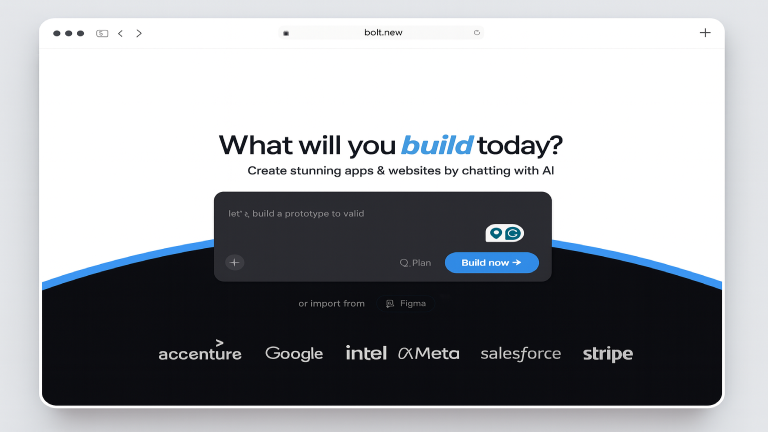
Bolt is an AI-first app builder that creates full-stack applications directly in your browser. You describe what you want, and Bolt assembles the frontend, backend, routes, components, and API logic in seconds. It feels like having an AI engineer sit beside you, generating entire projects fast enough that you can iterate without losing momentum.
The platform is designed for people who want real code without fighting a local dev setup. Everything happens in one space: editing, previewing, debugging, and deploying. Bolt feels close to traditional coding, just multiplied by the speed of AI.
Bolt is especially strong when you want to go from idea to running code fast. It removes friction in the early stages of a project but still gives you enough control to adjust the parts that matter.
Bolt is best known for…
- Fast full-stack generation – Generates full frontends and backends in one shot.
- Browser-based coding workspace – No setup, no repos, no local installation.
- AI-powered code editing – Rewrite components, add features, and refactor quickly.
- Built-in deployment – Ship the project without leaving Bolt.
- Framework familiarity – Uses technologies builders already understand.
Why you might prefer Bolt over Base44
Bolt is the better choice if you want real code, fast output, and more technical flexibility. It is built for people who enjoy shipping full-stack projects without going deep into no-code tools.
Base44 is stronger for non-technical users who want visual editing, but Bolt wins if your projects need structured logic or backend-heavy features.
Shipper sits above both by letting you build full-stack apps like Bolt, edit visually like Base44, and then launch everything in one place with AI guidance and resource management built in.
(You can read more related articles on Bolt alternatives)
What is Base44?
Base44 is a no-code builder built for simplicity. It focuses on creating lightweight apps, internal tools, workflows, and dashboards without requiring users to understand code. You build by dragging sections, adding data sources, and connecting small blocks together.
The platform is designed for beginners, freelancers, and small teams who want to create something useful without touching frameworks or server logic. Everything feels approachable, with a soft learning curve and friendly UI.
Base44 shines when you want to build simple interfaces or automate everyday tasks without worrying about infrastructure or developer tools.

Base44 is best known for…
- Easy visual editor – Build pages and interfaces without code.
- Beginner-friendly workflow builder – Automate tasks with minimal configuration.
- Lightweight publishing – Share apps quickly, no complex deployment pipeline.
- Business-friendly templates – Good starting points for small business tools.
- Low barrier to entry – Ideal for non-technical creators.
Why you might prefer Base44 over Bolt
Base44 is the better fit if you want to build simple apps without touching code. The editor is easier for beginners, the UI is more guided, and the learning curve is much lighter.
Bolt is more powerful for backend logic and full-stack structure, but Base44 is friendlier when all you want is a straightforward interface or automated workflow.
Shipper goes beyond both by combining Bolt’s technical depth with Base44’s ease of use, giving you visual editing and real code generation in the same workspace.
(You can read more related articles on Base44 alternatives)
What is Bolt or Base44 best suited for?
Bolt is best when you want to go from idea to real code quickly. It generates full-stack projects, gives you a browser-based coding environment, and lets you refine everything with AI. It’s ideal for technical builders or anyone who wants full control without setting up a local dev environment.
Base44 is best when you want the simplest path to a working tool. It focuses on visual editing, beginner-friendly automation, and small apps you can build without touching code. It’s a comfortable fit for freelancers, small teams, or creators who want something that “just works.”
Shipper is best for founders and teams who want the full workflow handled in one place, idea to live product, with backend, UI, hosting, and AI guidance included. It gives you Bolt’s depth and Base44’s simplicity without choosing between them.
| Use Case | Bolt | Base44 | Shipper |
|---|---|---|---|
| Full-stack generation | ⭐ Strong | 🟣 Limited | ⭐⭐⭐⭐⭐ Complete |
| UI generation | ⭐ Good | ⭐⭐⭐⭐ Excellent (visual builder) | ⭐⭐⭐⭐ Excellent (visual + AI) |
| Best for beginners | 🟣 Harder | ⭐ Easier | ⭐⭐⭐⭐ Easiest |
Here are other comparison links you may find interesting:
What is the main difference between Bolt and Base44?
Bolt is a full-stack AI coding environment. It generates real projects, real files, and real logic. It is powerful when you want something more technical, especially if your app needs backend routes, authentication, APIs, or custom logic. Bolt behaves more like an AI developer in the browser.
Base44 is a visual builder made for simplicity. You assemble screens and actions without worrying about code. It is built for non-technical creators who want the easiest path to a working tool without needing a technical foundation.
Shipper sits at the intersection of these two approaches. Unlike Bolt and Base44, Shipper lets you build full-stack apps with AI like Bolt, edit them visually like Base44, and launch everything from one place. It removes the tradeoffs between complexity and simplicity by giving you both.
Price Comparison: Bolt vs Base44
When you zoom out from features and UX, pricing is usually what decides which tool you’ll stay with for the long run. Bolt, Base44, and Shipper all start with a free plan, but they scale very differently: Bolt around tokens and teams, Base44 around message/integration credits, and Shipper around simple credits that cover both building and iterating.
If you’re in a hurry, this table is your shortcut: it shows how each tool charges, what their main growth steps look like, and where Shipper sits as the “third option” between full-stack AI builders (Bolt) and visual app platforms (Base44).
Bolt pricing highlights
- Free – $0/mo: 300K tokens/day, 1M tokens/month, hosting, Bolt branding on sites.
- Pro – $25/mo: no daily token limit, starts at 10M tokens/month, removes branding, custom domains, SEO boosts, higher file limits, unlimited databases.
- Teams – $30/mo per member: everything in Pro plus centralized billing, team access controls, private NPM registries, design-system knowledge.
- Enterprise – custom: advanced security (SSO, audit logs), 24/7 support, custom workflows, and SLAs.
Bolt’s pricing is built around token volume plus collaboration. The free tier is generous enough for experiments, while Pro and Teams unlock serious throughput and governance for long-term projects.
Base44 pricing highlights
- Free – $0/mo: 25 message credits and 100 integration credits per month to try the platform.
- Starter – $20/mo: 00 message credits and 2,000 integration credits, ideal for side projects and early prototypes.
- Builder – $50/mo: 250 message credits and 10,000 integration credits for more serious internal tools or client work.
- Pro – $100/mo: 500 message credits and 20,000 integration credits for complex applications.
- Elite – $200/mo: 1,200 message credits and 50,000 integration credits plus premium support for high-usage teams.
- Enterprise – custom: tailored limits and dedicated architect/account support.
Base44 uses a credit-based model: every plan includes unlimited apps, in-app code edits, backend functions, domain connection, GitHub integration, and a visual editor. You mainly scale by how many message + integration credits you need rather than paying to unlock core features.
Shipper pricing highlights
- Free – $0: test the full builder and Advisor on limited credits.
- Pro – $25/user/mo: 100 credits per month, more projects and usage, removes the Shipper badge.
- Enterprise – custom: everything in Standard plus dedicated support, custom integrations, SSO, and opt-out of data training.
Shipper keeps pricing simple: one main paid tier for most founders and small teams, powered by credits you spend on building, iterating, and using the AI Advisor. It’s positioned as the middle ground between token-heavy tools and complex credit matrices.
The intersection of Bolt and Base44… is Shipper 🙂
Shipper sits right where Bolt’s full-stack speed and Base44’s no-code simplicity meet. Describe your product once, and get a complete app you can edit, refine, and launch – without juggling editors, repos, or complex setup.
- • AI builds frontend + backend
- • Edit layouts visually, no code needed
- • AI Advisor suggests features & growth ideas
- • Go live in 1 click with hosting included
Features Comparison: Bolt vs Base44
Before choosing between Bolt and Base44, it helps to look past their marketing pages and understand how each tool behaves once you start building. Both platforms are powerful in their own ways, but they’re built for very different types of creators. Having used them long enough, I’ve seen where each one accelerates the process, where it slows you down, and how it feels when you’re refining a real project.
In this section, we’ll break down the most important features: setup speed, technical requirements, version control, and AI guidance. You’ll also see where Shipper stands as a third option for people who want a smoother journey from idea → finished product.
1. Setup Complexity
Setup complexity determines how quickly you can move from idea to your first working build. Some tools feel instant, others expect you to prepare an environment or understand your stack before you get real output.
1.1. Bolt’s setup complexity
Bolt is built for shockingly fast starts.
Strengths:
- Browser-based editor
- No installation
- Full-stack scaffolding from a single prompt
- Backend + frontend generated instantly
You can open Bolt and have a functioning project in minutes. It’s hands-down one of the quickest ways to generate real code.
Limitations:
- Requires understanding file structures
- Best for users with some technical comfort
- Custom logic still expects developer intuition
Fast, but not fully “beginner-first.”
1.2. Base44’s setup complexity
Base44 goes one step further for non-technical users.
What feels easy:
- Visual builder
- Zero environment configuration
- Prompt-based screen creation
- No code required to get started
Where complexity appears:
- Credit usage affects how you build
- Advanced workflows take learning
- Backend abstractions can feel limiting
Much friendlier for beginners than Bolt, but still requires orientation when you go deeper.
1.3. Shipper’s setup complexity
Shipper removes setup entirely.
How it works:
- Sign up
- Describe the product
- The system builds the full app end-to-end
No repos, no installations, no framework decisions. It’s an immediate jump into shaping your idea.
1.4 Who does setup complexity better?
Bolt is unmatched for developers who want instant scaffolding.
Base44 offers the smoothest onboarding for no-code builders.
Shipper is the only one with zero setup, but the category winner must reflect tool-to-tool fairness.
Winner: Bolt wins setup complexity with the quickest path from prompt to full-stack code.
2. Technicality
Technicality determines who each platform truly serves; developers, non-technical founders, or somewhere in between.
2.1. Bolt’s technical requirements
Bolt is clearly built for technical users.
- Works with real frameworks
- Requires reading and editing code
- Ideal for semi-technical founders and engineers
It reduces complexity but doesn’t eliminate it.
2.2. Base44’s technical requirements
Base44 is more accessible but not entirely “no learning required.”
You still navigate:
- Components
- Workflows
- Credit systems
- Template structures
Beginner-friendly, but not frictionless.
2.3. Shipper’s technical requirements
Shipper removes the need for any technical background.
No coding, no design tools, no architectural decisions. The Advisor fills every gap; code, UX, marketing, monetization, flows, and system decisions.
2.4. Who handles technicality better?
Bolt is best for engineers. Base44 is easier for beginners.
But Shipper is the only tool where technical skill is irrelevant.
Winner: Shipper wins technicality by letting people build full products with zero coding experience.
3. Version Control
Version control determines how safely and confidently you can experiment.
3.1. Bolt’s version control
Light but useful:
- Snapshots
- Regenerations
- Manual export to Git
Simple, but not deep.
3.2. Base44’s version control
Matches the no-code model:
- Auto-save
- Undo history
- No GitHub workflows
- Good for small builds, limited for complex teams
Efficient but not powerful.
3.3. Shipper’s version control
Designed for beginners:
- One-click restore
- Automatic snapshots
- No Git branches or commits
- Encourages experimentation
The simplest rollback experience out of the three.
3.4. Who does version control better?
Base44 offers the cleanest structured versioning flow for non-coders.
Bolt gives developers more latitude and control.
Shipper is the easiest but not the “strongest” in technical flexibility.
Bolt wins version control with better control for technical projects.
4. AI Assistance & Proactiveness
AI support is no longer about generating code, it’s about guiding the entire build process.
4.1. Bolt’s AI assistance
Bolt is powerful but reactive:
- Generates full apps
- Refactors code
- Fixes issues through prompts
- Helps as a coding partner
But it only responds when asked.
4.2. Base44’s AI assistance
Base44 supports:
- Screen generation
- UI improvements
- Workflow suggestions
However:
- No product strategy
- No marketing or growth guidance
- No proactive UX or architecture planning
Helpful, but only within the builder’s constraints.
4.3. Shipper’s AI assistance
This is where Shipper behaves differently.
The Advisor acts like a strategic co-founder:
- Coding
- UX design
- System architecture
- Monetization
- Security
- Product storytelling
- Funnel optimization
And it proactively suggests improvements, not just reacts.
4.4. Who does AI assistance better?
Bolt has stronger raw code generation.
Base44 is good for no-code flows.
But Shipper is the only tool that thinks ahead, not just responds.
Shipper wins AI assistance because it guides product decisions, not just code output.
Customer support
When things break, limits get confusing, or a deploy fails at the worst time, customer support suddenly matters more than any individual feature. It’s the difference between losing a full day to debugging alone or getting unblocked in a few messages.
In this section, we’ll look at how Bolt, Base44, and Shipper handle support, what channels they offer, how “human” they feel, and which one is the most helpful if you’re not a deeply technical user.
Bolt’s support
Bolt’s support is built around a developer-first, self-serve model, with extra help layered on for bigger teams.
What Bolt offers:
- Help Center/docs for tokens, billing, hosting, and database limits
- FAQ & guides linked from the pricing and product pages
- Email support for account and billing issues
- Priority & dedicated support on Teams and Enterprise plans (SSO, audit logs, compliance, etc.)
What this feels like in practice:
- If you’re a developer, Bolt’s documentation and examples are usually enough to get you unstuck.
- If you’re less technical, you’ll probably spend more time reading docs and experimenting before you hear back from a human.
- The strongest support experience is reserved for Teams/Enterprise, where you get more structured help and faster responses.
Bolt’s support works well if you’re comfortable reading technical docs and debugging your own environment, but it doesn’t really “hold your hand” unless you’re on a higher plan.
Base44’s support
Base44’s support model is tied closely to its plan structure, with more direct help and “premium support” as you move into the higher tiers.
What Base44 offers:
- Docs & FAQs covering credits, integrations, limits, and troubleshooting
- In-product “Get started” flows that reduce how often you even need support
- Email/ticket support for plan and technical issues
- Premium support on higher tiers (Pro, Elite) with faster responses and closer guidance
- Sales & enterprise contact for organizations that need tailored onboarding and architecture help
What this feels like in practice:
- On Free/Starter, you’re mostly guided by docs and product hints.
- On Builder / Pro / Elite, you get more attention, faster responses, and help with scaling or more complex setups.
- Base44’s visual, no-code approach already hides a lot of complexity, so you need support less often, but when you do, it’s still mainly ticket-based and reactive.
Base44’s support is solid for no-code builders who are willing to wait for email responses and rely on documentation, but you don’t really get a “partner in the loop” unless you’re enterprise.
Shipper’s support
Shipper is designed so that support feels like part of the product, not just a fallback when something breaks. You get both human support and AI support baked into the workflow.
What Shipper offers:
- Live support for paid users (fast answers when you’re blocked)
- Email support for all accounts
- Community channels:
- A dedicated Discord server
- r/Shippernow Subreddit for feedback, showcases, and peer help
- Help Center/docs to cover the basics of building, credits, and deployment
- The Advisor (AI) inside the builder, which:
- Reviews your project
- Suggests what to build next
- Helps with copy, UX, marketing, and architecture
- Assists in debugging and fixing issues directly in your app
What this feels like in practice:
- You don’t have to choose between “wait for support” and “figure it out alone.” The Advisor can often fix the issue or at least explain it before you even open a ticket.
- When you do need a human, you still have live chat, Discord, and email to fall back on.
- It’s especially friendly for non-technical founders, because support is framed in product language (“here’s what to change and why”), not just error logs.
Shipper’s support is intentionally closer to having a co-founder plus a support team, rather than just a ticketing system.
Who does customer support better?
All three tools can get you answers, but they serve different users:
- Bolt is strongest for developers who like detailed docs and don’t mind digging through examples while waiting for email responses or enterprise help.
- Base44 gives no-code builders a clear, structured path with decent docs and better support as you move up to Pro and Elite, but it remains mostly ticket-based.
- Shipper goes further by combining real-time human support, community, and an embedded AI Advisor that can debug, suggest improvements, and guide your product direction without waiting for a human reply.
If you’re a senior developer with existing workflows, Bolt’s and Base44’s support will feel familiar and “good enough.” But if you’re a founder, solo builder, or small team that can’t afford long pauses, Shipper is clearly the more supportive environment.
Shipper wins on support because it combines live help, community, and an in-product AI Advisor that actually guides what you should build next, not just how to fix an error.
This tool takes the best out of Bolt & Base44
Bolt gives developers speed and direct control, while Base44 helps non-technical teams build interfaces and workflows without touching code. But both tools leave important gaps. Bolt still expects you to manage code, structure, and deployments. Base44 still requires you to understand credits, limits, and app configuration before you can build something meaningful.
Shipper fills the middle ground neither tool covers. It gives you the speed of Bolt and the simplicity of Base44, but adds something they don’t provide: a true “assistant-cofounder” that builds the frontend, backend, logic, flows, and pages for you, and then tells you what to improve next.

Shipper is built to help you go from an idea to a live product with less effort than any other AI app builder, and here’s why:
Why Shipper is better than both Bolt & Base44:
- Builds a full app (frontend + backend + workflows) from one prompt
- Has The Advisor, an AI co-builder that guides strategy, UX, architecture, and marketing
- No version control headaches, one-click rollback
- Debugging feels effortless with AI auto-fix
- No credits confusion, simple pricing
- Works for founders and beginners, not just developers
- Lets you launch in minutes, not days
If you want a tool that doesn’t just generate code or UI but builds a full product and helps you improve it, Shipper is worth trying. It sits right between the power of Bolt and the simplicity of Base44 without their limitations.
The Verdict: What’s Better, Bolt or Base44?
After working with both Bolt and Base44 long enough to understand their strengths, I realized they solve two very different problems. Bolt feels like stepping into a fast-moving developer cockpit, the moment you give it a prompt, it generates a full codebase and pulls you straight into a coding flow. Base44, on the other hand, feels more like a structured no-code environment, where you guide your app visually and let the platform manage the heavy lifting behind the scenes.
If you’re a developer who enjoys working inside a familiar coding workflow, Bolt will feel comfortable. It gives you real files, real structure, and real control. Base44 is friendlier for people who want a cleaner, credit-based system for building without touching code. It’s organized, consistent, and predictable, especially for internal tooling or simple product dashboards.
But once you push past the first version of your idea, you start to notice gaps. Bolt expects you to continue writing and managing code as your project grows. Base44 expects you to manage credits, limits, integrations, and structure before the app becomes fully functional. Both tools are strong, just not complete. One leans technical, the other leans visual, but neither fully supports the entire journey from idea to deployed product.
That’s where Shipper quietly steps in. It takes the creative speed of Bolt and the beginner-friendly simplicity of Base44, then adds everything neither offers: a proactive AI Advisor, automatic backend generation, one-click rollbacks, built-in logic flows, and a guided product-building experience that feels like working with a smart technical co-founder rather than a tool.
What changed things for me wasn’t just feature comparison; it was realizing that building a product is more than writing code or dragging components. Its structure, decision-making, iteration, strategy, UX, onboarding, and launch. Bolt helps with speed. Base44 helps with visual clarity. Shipper helps with the entire process, end-to-end, without expecting you to be technical.
That doesn’t make Bolt or Base44 “bad choices.” They’re excellent at what they specialize in. But if you want a tool that removes complexity, helps you think, builds complete apps on your behalf, and grows with your ideas, Shipper becomes the more natural answer.
And that’s really the bottom line: Bolt is powerful, Base44 is accessible, but Shipper is the only one that feels truly built for modern creators who want to go from idea → product → launch with confidence instead of friction.
If you want a builder that simplifies everything and moves with you at every stage, Shipper is the one worth betting on.
The intersection of Bolt and Base44… is Shipper 🙂
Shipper sits right where Bolt’s full-stack speed and Base44’s no-code simplicity meet. Describe your product once, and get a complete app you can edit, refine, and launch – without juggling editors, repos, or complex setup.
- • AI builds frontend + backend
- • Edit layouts visually, no code needed
- • AI Advisor suggests features & growth ideas
- • Go live in 1 click with hosting included
FAQ: Bolt vs Base44
1. What’s cheaper, Bolt or Base44?
Bolt has a simpler pricing model: Free, Pro at $25/month, Teams at $30/user, and custom Enterprise.
Base44 uses a tiered credit-based system: Free, Starter at $20/month, Builder at $50/month, Pro at $100/month, and Elite at $200/month.
If your goal is raw affordability, Bolt is cheaper across comparable tiers. Base44 becomes more costly as soon as you need more credits or advanced usage.
2. Is Bolt or Base44 better for beginners?
Base44 is generally easier for beginners because it reduces code exposure and provides a visual builder.
Bolt requires more technical understanding of frameworks, file structures, and backend flows, so it favors developers.
If you’re new to building apps, Base44 is more beginner-friendly, but both still expect some level of technical thinking compared to Shipper.
3. How is Bolt different from Base44 in how they build apps?
Bolt generates a full codebase instantly, giving you a developer-style environment where you can edit and iterate through AI or manual coding.
Base44 focuses on no-code and low-code workflows, where the platform manages much of the backend, credits, and structure for you.
In short: Bolt = code-first full-stack generation. Base44 = credit-based no-code builder for internal tools and simple applications.
4. Which tool is better for building full products quickly?
Bolt builds full-stack scaffolding fast but requires continued coding as you scale.
Base44 accelerates early UI and workflow creation but can feel limiting for deep customization or complex products.
If you want the fastest path from idea → working product without technical blockers, neither is as complete as Shipper, which handles backend, UI, logic, and product decisions automatically.
Earn 50% + lifetime recurring commissions
Share Shipper with your audience and get paid every month, for life.
Earn 50% + lifetime recurring on every sale
Share Shipper with your audience and get paid every month, for life — no cap on earnings.
Earn 50% + lifetime recurring on every sale
Share Shipper with your audience and get paid every month, for life — no cap on earnings.